

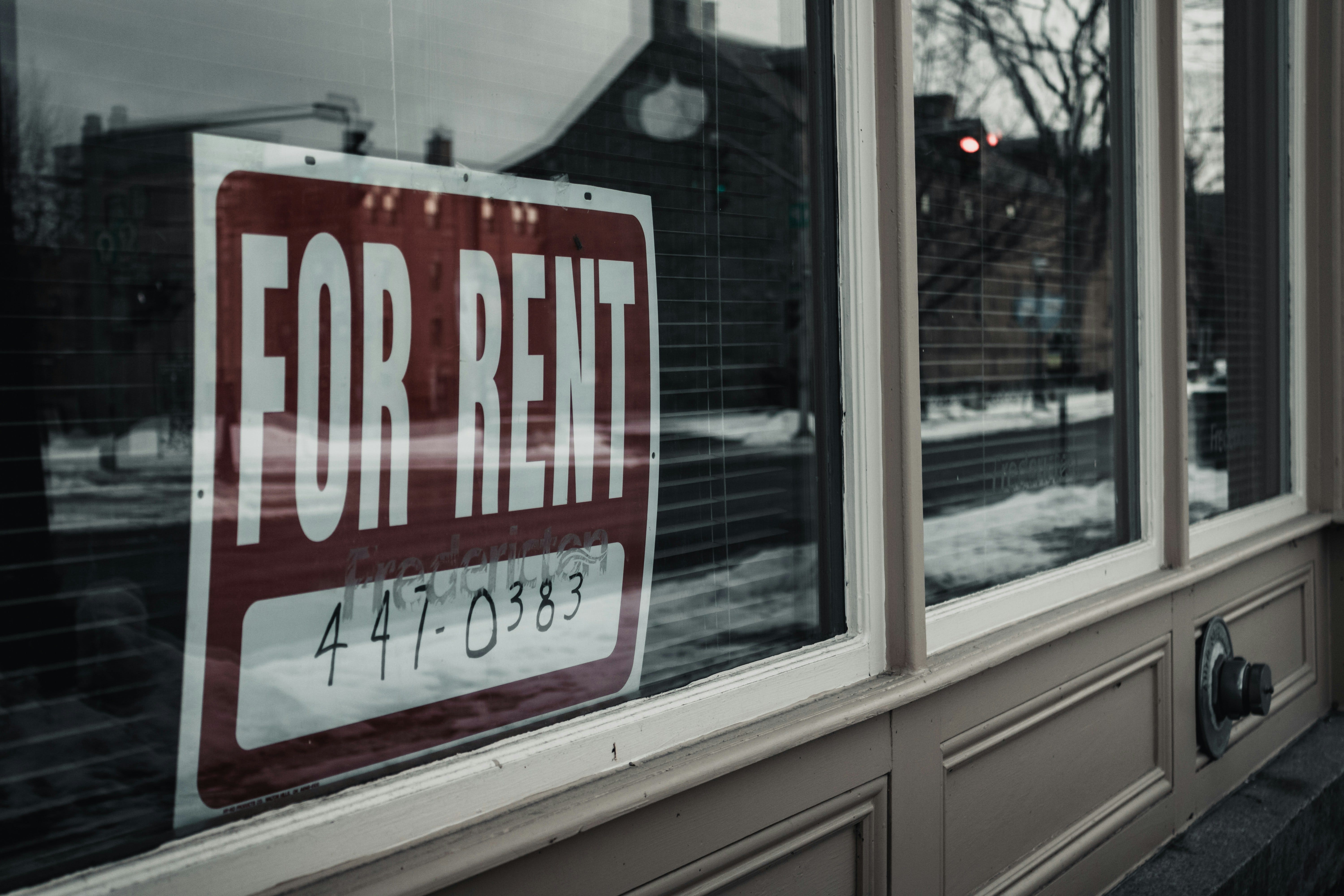
Starting in May 2021, Knoxville’s rental market experienced 23 consecutive months of double-digit rent increases—leaving cash-strapped renters to absorb rent hikes that routinely exceeded $300 a month. Many simply blamed it on landlord greed, but that narrative misses a less nefarious explanation: in the pandemic’s wake, a surge of in-migration and new renters pushed rental occupancy close to 99%—effectively full, once you account for normal turnover—while, like nearly every other industry, operating costs were soaring. Raising rents to cover the gap was only natural; that’s how a business works.
That’s not to say every landlord was simply covering costs. The line between covering costs and raising rents just because you can isn’t always clear. But in a sense, that’s beside the point: landlords can’t arbitrarily increase rents by hundreds of dollars a month if renters have other, more cost-effective options to turn to. During the pandemic years, those options didn’t exist, so renters had little choice but to accept whatever increase came their way.
But that dynamic no longer exists today—at least for now.
A Historic Wave of New Supply Is Exerting Downward Pressure on Rents
When the COVID-19 pandemic cause the world to shut down in March 2020, it was unclear what exactly it would mean for the housing market—and few expected what actually happened. As the pandemic and remote work freed people from needing to live near a specific employer, a steady stream of workers and families left the country’s largest metros for smaller, more affordable ones—drawn by lower costs, more space, and a better quality of life.
Household formation, which refers to the rate at which people establish new, separate households, also surged. Beyond migration, COVID-era stimulus payments and unusually high savings rates gave many people—roommates, young adults living at their parents’ home—the opportunity and means to live independently. This matters because household formation can drive housing demand even without population growth. If two roommates split into separate households, or a young adult moves out of their parents' home, the population hasn't changed—but the number of housing units needed has. In Knox County, nearly one-third of households consisted of just one person as of 2024—a trend that, on its own, pushes housing demand higher independent of whether the county’s population is growing at all.
That combination—strong in-migration and the broader wave of new household formation—created a perfect storm: more new households competing for a housing stock that wasn’t growing fast enough to absorb them, adding further pressure to an already tight market. This made East Tennessee especially attractive to apartment developers, who viewed the region as having an ideal mix of strong rent-growth potential and the capacity to absorb more units without killing that potential.
That outlook prompted a historic surge in new multifamily permits. From 2010 to 2019—a period of stable but modest growth—the Knoxville metro area saw an average of 561 multifamily units permitted annually. Since 2020, however, that number surged to 1,700 a year, adding thousands of units to the region’s rental supply. As of the second quarter of 2026, Knoxville’s apartment vacancy rate now sits at 4.4%, slightly below the 4.5% statewide rate—evidence that even with all that new supply, the region hasn’t overbuilt relative to demand.
The Single-Family Market Is Cooling Too
The surge in new apartments across East Tennessee gets most of the attention—that is, after all, what is most visible to residents—but the single-family rental market experienced a similar supply boost.
From January 2019 through July 2026, the Knoxville metro area added an average of 150 new single-family rental listings. That didn't change much during the years immediately after the pandemic—new listings actually dipped slightly to around 130 a month in 2020 and 2021, consistent with the tight, landlord-favorable market renters were facing at the time.
The reversal didn't begin until 2022, when new single-family listings jumped to 258 a month—a 72% increase over the 2019 baseline. From there it accelerated fast. Through the first seven months of 2026, the region has added roughly 574 new listings a month—nearly quadruple the pre-pandemic average, and a 272% increase compared to 2019.
New Supply Is Pushing Down Rents
The injection of new supply is working as intended. After years of double-digit increases, annual rent growth plummeted from a high of 20% in the third quarter of 2022 to -2.7% in the second quarter of 2026. Effective rents—the average rent for all units across the entire metro area—have fallen on an annual basis for 16 consecutive months, marking the weakest stretch of rent growth since the depths of the 2008 financial crisis.
(Note: All figures in this piece reflect conventional multifamily housing and exclude purpose-built student housing, which is tracked separately and behaves as distinct submarket with its own supply and leasing cycle. I wrote in detail about local student housing market trends back in June, which you can read here.)
Weaker rent growth reflects both more supply and softer demand, as shaky economic conditions have weighed on new household formation. Overall rental demand, as measured by Zillow’s Observed Renter Demand Index, is down roughly 75% from its pandemic high and remains well below historic averages.
Declining rents aren’t the only sign of a weaker rental market either. Concessions—incentives like a free month’s rent, reduced deposits, or waived fees used to entice renters—have become far more common. At the height of the rental boom in 2022, just 1.1% of rental units offered concessions because there were few vacant units needing to be filled. By mid-2026, with over 6,000 more rental units on the market, nearly a quarter of units were offering concessions.
The Rental Market’s Loyalty Penalty
One of the clearest signs that renters have regained some leverage is what happens when an apartment changes hands. Since late 2024, landlords have been renting units to new tenants for less than the previous tenants paid for those same units, with rents for new leases down 2.1% from the prior year in the second quarter of 2026.
That doesn’t necessarily mean every apartment is getting cheaper. It is, however, a clear signal that landlords are having a harder time raising rents—and are opting to lower prices or offer incentives to reduce vacancies. That’s a stark reversal from the pandemic-era market, when available units were scarce and competition for those units was fierce. With a dearth of alternatives, landlords could raise rent substantially after a tenant moved out, so the safer, cheaper choice for most renters was to stay put.
Today, renters have more options, giving them greater freedom to compare properties and negotiate. That leverage, however, hasn’t yet extended to renters who are staying put. Those who renew their leases are still paying more, on average, than they did previously—with the latest data showing renewal rents up 4.1% from the prior year—but those increases are much smaller relative to their pandemic highs. With more unoccupied units, landlords and apartment operators now have to compete directly with other properties to fill an empty units, forcing them to lower rents and offer concessions. But they still retain some leverage over existing tenants who are comfortable where they are or would rather avoid the cost and inconvenience of moving—a dynamic that is hard to break when incomes are rising.
The result is something of a loyalty penalty: most renters who choose to renew their leases are still facing rent increases even while similar units are being offered to new tenants at lower prices. That helps explain why the market can be cooling overall even as many existing tenants keep seeing rent increases. Renters have far more leverage today—but they must be willing to move to use it.
Why “Normal” Still Doesn’t Feel Normal
Knoxville’s rental market is gradually rebalancing, with new supply easing pressure that built up over the past five years. But more “normal” market conditions aren’t the same as more affordable—even nearly two years of modestly negative rent growth is not enough to erase several years of double-digit increases. As a result, affordability remains deeply strained for many renter households. The income needed to afford the typical rental grew more than twice as fast as household earnings from 2019 to 2025. Today, the typical apartment rent is roughly 60%, or $572, higher than in 2019—meaning the typical renter is spending over $6,800 more each year on housing relative to just six years ago.
The deleterious effect of quickly rising rents was compounded by the strong bout of inflation since the 1980s, which undercut purchasing power even as most workers saw the dollar amount of their paychecks increase.That is, in large part, why 46.8% of Knoxville renters—or roughly 115,000 households across the broader metro area—spend more than 30% of their income on rent, and 24% spend more than half, according to 2024 Census data.
Still, continued affordability challenges don’t negate the fact that market conditions are improving. By the numbers, today’s market is historically normal—perhaps even weak in the eyes of landlords and investors. Apartment rents have declined year-over-year for 16 consecutive months, and new lease applications are down roughly 22% compared to pre-pandemic levels. But that’s little consolation for renters who’ve already watched rent consume a growing share of their budget.
What’s Next
What is frustrating—even if it's advantageous over the long run—is how slowly the housing market can move, and how long it can take for the effects of that movement to reach to the typical renter. Still though, Knoxville’s rental market is unquestionably moving in the right direction.
The central question, then, is whether—and to what extent—supply continues to expand in the years ahead. Multifamily permitting and single-family rental construction both surged in response to favorable financing conditions during the pandemic, but with interest rates now elevated and demand subdued, the underlying calculus has shifted. Rents are falling and lease applications have declined significantly. Financing has grown measurably harder to obtain, and even where capital is available, elevated construction costs and land prices have rendered many projects that once penciled out financially unviable. These are exactly the conditions under which developers and investors typically retreat, and the data suggest that retrenchment is already underway: the number of apartment units under construction across the Knoxville metro area fell to 633 in the second quarter of 2026, well below the 2022-2025 average of 2,200.
That pullback is exactly why renters shouldn’t get too comfortable. In today’s market, renters hold more leverage than at any point since the pandemic began—the loyalty penalty caveat notwithstanding—but that leverage is a function of the supply built during the boom years. Should new construction continue to slow as it has in past cycles, the pipeline of new supply currently giving renters the upper hand could taper off quickly, and that leverage will not persist indefinitely.
Support My Work
This publication is free and publicly accessible to everyone.
That doesn’t mean it’s free to produce. Behind each article are real costs—from data subscriptions and software to research tools and analysis—and, to date, I’ve covered those myself.
If you find this work valuable, please consider making a donation of any amount. Every donation goes exclusively toward supporting and expanding this publication, not to benefit me personally. Your support helps keep this work free and accessible to all.
Did I miss information on under construction or new permits issued? It seems everywhere new units are under construction or sites being developed. I would be hesitant to commence new projects today but perhaps I am misinformed.